
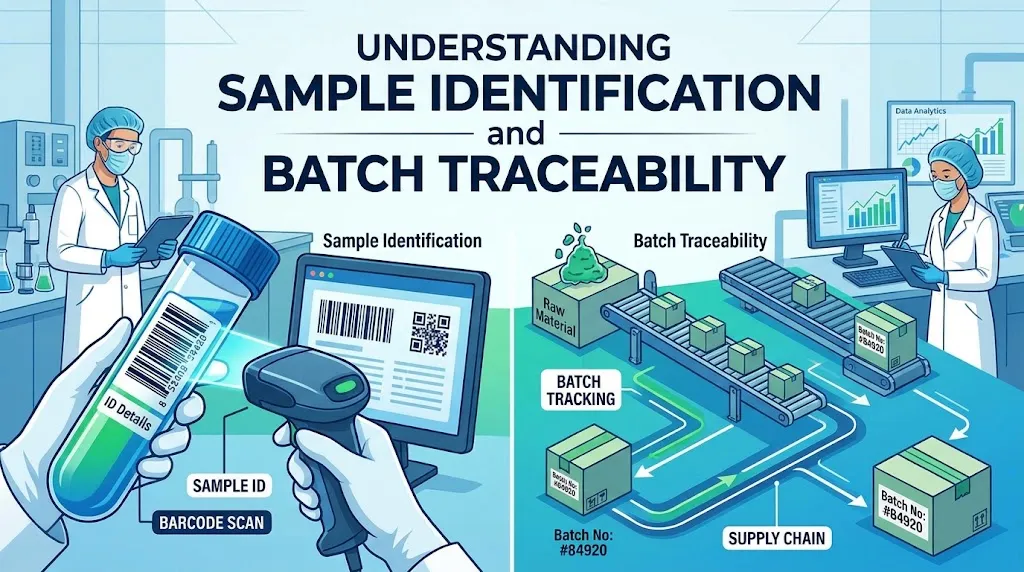
Accurate sample identification is fundamental to laboratory research. When multiple materials are received, tested, stored, or documented, laboratories need a reliable way to distinguish individual samples and connect them with relevant supplier records.
Sample identification and batch traceability are closely related, but they serve different purposes. Understanding this distinction helps researchers maintain accurate records and avoid confusion when reviewing analytical documentation.
For laboratories sourcing research materials in the UAE, Remy Research provides a supplier reference for reviewing material information and associated documentation.
All materials discussed in this article are intended strictly for in-vitro laboratory research only. They are not intended for human or veterinary use.
1. What Is Sample Identification?
Sample identification is the process of assigning or recording a reference that distinguishes one laboratory sample from another.
A sample may receive an identification number when it is submitted for analysis, entered into an inventory system, or included in an internal research record.

Depending on the laboratory’s procedures, a sample identification record may include:
- Sample identification number.
- Material description.
- Date received.
- Source or supplier.
- Associated product reference.
- Relevant batch number.
- Testing or inventory status.
A unique sample reference helps personnel locate the correct information without relying only on product names.
2. What Is Batch Traceability?
Batch traceability is the ability to connect a particular batch of material with its relevant documentation and records.
A batch number is generally assigned by the supplier or manufacturer to distinguish a defined group of materials.
It can be used across procurement documents, packaging labels, supplier records, and laboratory inventory systems.
However, a batch number does not automatically establish that a material has undergone analytical testing. Its relationship with a laboratory report must be supported by the available documentation.
3. Sample Number Versus Batch Number
These two identifiers are often confused, but they are not necessarily interchangeable.
| Identification Type | Main Purpose |
| Sample ID | Identifies an individual sample within a laboratory system |
| Batch number | Identifies a defined material group within supplier or manufacturer records |
| Product reference | Identifies a product or catalogue entry |
| Inventory ID | Identifies a record within the laboratory’s internal inventory |
For example, a testing laboratory may assign a sample ID to a material submitted by a supplier. The supplier may use a separate batch number for the associated material.
Both references should be preserved when available.
4. Why Unique Sample Identification Matters
Unique identification helps laboratories avoid mixing records belonging to different samples.
This becomes particularly important when a facility handles:
- Multiple products with similar descriptions.
- Samples from different suppliers.
- Separate batches of the same material.
- Samples submitted at different times.
- Original and repeat testing records.
A clear identification system reduces reliance on memory and makes it easier to locate the correct analytical information.
5. Connecting Samples With Analytical Reports
An analytical report should identify the sample to which its findings relate.
The report may include a sample number, product description, batch reference, or other identifying information.
Laboratory personnel should compare these details with the relevant internal and supplier records.
A useful record connection may include:
- Original product description.
- Supplier-assigned batch reference.
- Laboratory sample identification.
- Report or certificate number.
- Testing date.
- Associated procurement record.
If the report identifies a sample but does not establish its connection to a particular supplied batch, further clarification may be necessary.
6. Maintaining Sample Identification During Receipt
When a research material arrives at a laboratory, its identification should be recorded according to the facility’s internal procedures.
The receipt record may include:
- Date of receipt.
- Supplier name.
- Product description.
- Batch or lot reference shown on the label.
- Relevant order reference.
- Internal inventory number.
- Associated document references.
- Any visible identification discrepancies.
Original supplier identifiers should be preserved exactly as presented.
If the laboratory assigns an additional internal sample number, that number should be recorded separately.
7. Understanding Sample Mapping
A supplier may associate a tested sample with a product batch or other listed product formats.
This is sometimes described as sample mapping.
The mapping should clearly distinguish the sample directly analysed from any other materials associated with it through supplier records.
For example, a report relating to one identified sample should not automatically be interpreted as independent testing of every strength, format, or presentation listed by the supplier.
Researchers should retain the supplier’s explanation of the mapping and avoid extending the report’s conclusions beyond its documented scope.
8. Handling Multiple Samples From the Same Batch
A laboratory may work with more than one sample associated with a single batch reference.
In such cases, each sample should retain its own identification number.
The batch number can provide the shared supplier reference, while the individual sample IDs distinguish the separate samples within the laboratory.
This structure helps personnel identify which sample was used for a particular analytical activity or internal record.
It also prevents different testing events from being combined without a clear explanation.
9. Common Sample Identification Problems
Several issues can weaken sample traceability.
Duplicate sample numbers: Two different samples may accidentally receive the same internal reference.
Missing batch information: A sample may be recorded without its supplier batch number.
Inconsistent descriptions: Product names may differ between labels, reports, and inventory records.
Unlinked reports: Analytical documents may not be connected to the relevant sample ID.
Unexplained mapping: A report may be associated with other product formats without clear supporting information.
Manual identification changes: Original identifiers may be altered during data entry.
Laboratories should document these issues and follow their internal procedures for clarification and correction.
10. Building a Sample Traceability Record
A standard record can connect the main identifiers used by suppliers and laboratories.
| Field | Record Information |
| Internal sample ID | Laboratory-assigned sample reference |
| Product name | Original material description |
| Supplier | Supplying organization |
| Product reference | Supplier product identifier |
| Batch number | Supplier batch or lot reference |
| Receipt date | Date received |
| Report number | Associated analytical report |
| Testing laboratory | Laboratory named in the report |
| Testing date | Date stated in the document |
| Mapping notes | Any supplier-provided sample association |
| Review status | Complete or clarification required |
The record should link to the original documents wherever possible.
11. Sample Traceability for UAE Research Laboratories
When reviewing Research Peptides Dubai documentation, laboratories should examine whether sample references and batch identifiers are presented clearly.
A useful recordkeeping process should make it possible to distinguish the laboratory’s sample ID from the supplier’s batch reference.
It should also explain whether a published report relates to a directly tested sample, a supplier-mapped product reference, or another documented association.
This distinction is particularly important when reports and product listings use different identification systems.
12. Practical Sample Identification Checklist
Before completing a sample record, laboratory personnel can confirm:
- Is the sample uniquely identified?
- Is the original product description recorded?
- Is the supplier identified?
- Is the batch number preserved?
- Is the internal sample ID separate from the batch number?
- Is the relevant report number recorded?
- Does the report identify the tested sample?
- Is the sample-to-batch relationship documented?
- Are supplier-provided mappings clearly labelled?
- Are discrepancies recorded for clarification?
- Are original documents retained?
This checklist can be adapted to the laboratory’s internal quality and recordkeeping procedures.
Conclusion
Sample identification and batch traceability are essential parts of organized laboratory documentation. Sample IDs distinguish individual samples, while batch numbers connect materials with supplier records and associated documentation.
Maintaining both identifiers accurately helps laboratories link analytical reports with the correct samples and avoid confusing separate supply batches.
A consistent system should preserve original references, document supplier-provided mappings, and make unresolved discrepancies visible. This supports clear, traceable, and responsible management of research material records.
All materials discussed in this article are intended strictly for in-vitro laboratory research only and are not intended for human or veterinary use.