
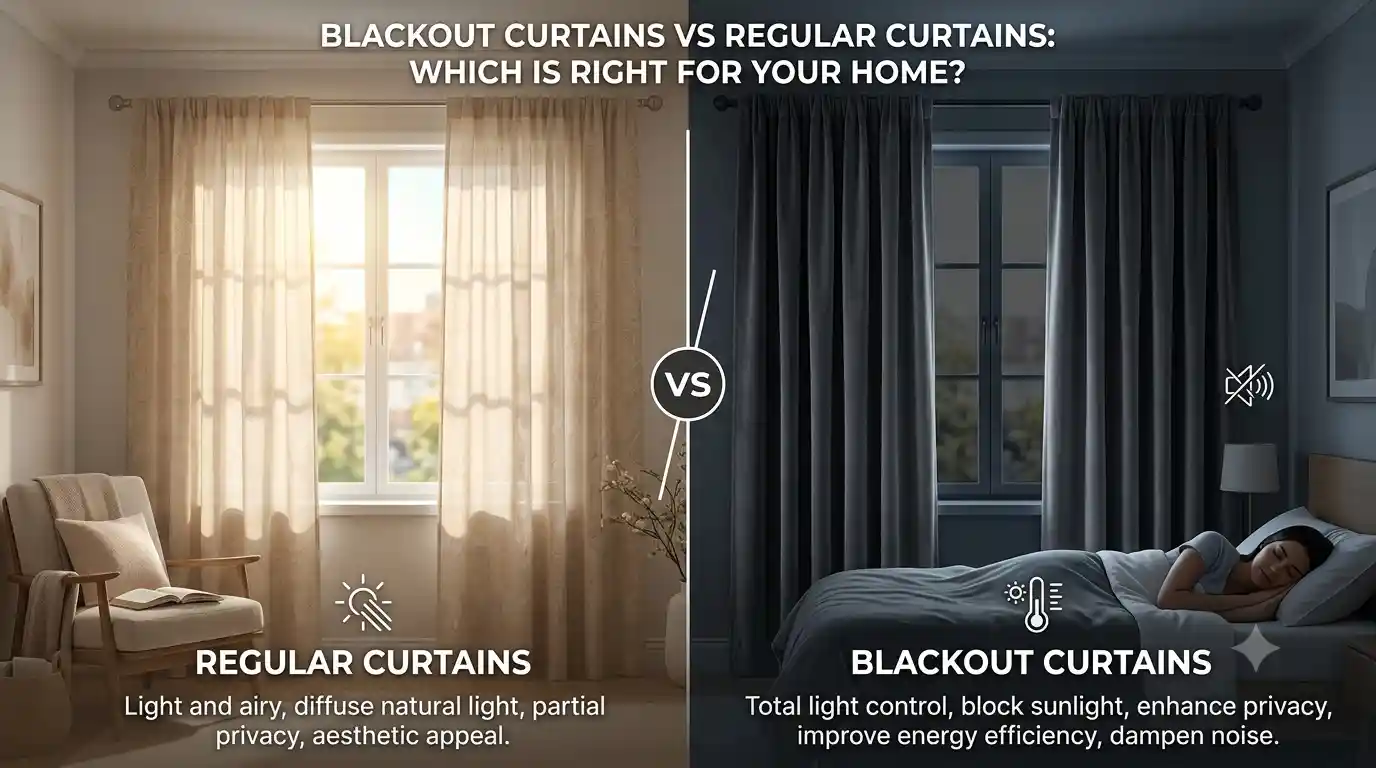
Curtains are one of the most important elements of interior design. They influence how much natural light enters a room, how private the space feels, and how the overall interior looks. However, not every type of curtain provides the same level of performance. When homeowners are deciding between traditional curtains and blackout curtains, understanding the differences can make the decision much easier.
Regular curtains can be suitable for decorative purposes and basic light filtering, while blackout curtains are designed to provide stronger control over external light. The right choice ultimately depends on the room, lifestyle, privacy requirements, and desired appearance.
Understanding Regular Curtains
Regular curtains are available in countless fabrics, colors, patterns, and designs. Their primary purpose can be decorative, although many also provide some degree of privacy and light filtering.
Lightweight regular curtains allow more daylight to enter a room. Medium-weight fabrics provide greater coverage but may still allow sunlight to pass through.
For living spaces where natural light is desirable, traditional curtains can be an excellent choice.
What Makes Blackout Curtains Different?
Blackout curtains are designed specifically to reduce the amount of external light entering a room.

They typically use dense fabric, specialized lining, or a combination of materials to create stronger light-blocking performance.
This makes them particularly suitable for bedrooms, nurseries, media rooms, and spaces where controlling natural light is important.
Comparing Light Control
The biggest difference between the two types is light control.
Regular curtains can soften sunlight, but depending on the material, considerable light may still pass through. Blackout curtains provide significantly stronger control.
For bedrooms, this difference can be important. If early morning sunlight enters through the window, blackout curtains can create a darker environment when closed.
In living rooms, however, homeowners may prefer some natural light during the day.
Privacy Differences
Privacy is another important consideration.
Thin or lightweight curtains may allow silhouettes to be visible from outside, particularly when indoor lights are switched on at night.
Blackout curtains provide stronger coverage and can make it much more difficult for people outside to see into the room.
This makes them particularly useful for bedrooms and properties where windows face busy streets or neighboring buildings.
Which Is Better for Bedrooms?
For most bedrooms, blackout curtains offer several practical advantages.
They can reduce early morning sunlight, provide nighttime privacy, and create a darker atmosphere. This can be especially beneficial for children, shift workers, and people who prefer a darker sleeping environment.
Regular curtains can still be used in bedrooms, particularly when natural light and decorative appearance are more important than maximum light control.
Which Is Better for Living Rooms?
Living rooms often require greater flexibility.
Homeowners may want bright natural light during the day but stronger privacy in the evening. In such cases, combining sheer or regular curtains with blackout curtains can provide the best of both options.
The lightweight layer can be used during the day, while the blackout layer can be closed when needed.
Blackout Curtains for Home Offices
Home offices are another space where light control can be valuable.
Excessive sunlight can create glare on computer monitors and make it difficult to work comfortably. Blackout curtains allow homeowners to reduce direct sunlight when necessary.
However, they do not need to remain closed all day. Opening them when natural light is comfortable can help create a brighter and more pleasant workspace.
Choosing Based on Interior Design
Curtains should complement the overall interior rather than simply perform a practical function.
Regular curtains are available in a huge variety of decorative designs, while modern blackout curtains are also available in sophisticated colors and textures.
Neutral blackout curtains can work particularly well in contemporary interiors. Textured fabrics can add visual interest without making the room look overly dark.
Layered Window Treatments
Layering is one of the best ways to combine appearance and functionality.
Sheer curtains can provide soft daylight and an elegant appearance, while blackout curtains can provide stronger light control when required.
A double-track system allows both layers to operate independently.
This setup works particularly well for large Dubai windows and floor-to-ceiling glass doors.
Energy and Indoor Comfort Considerations
Controlling direct sunlight can also contribute to indoor comfort. When intense sunlight enters through windows, rooms can feel warmer and brighter.
Closing suitable curtains during periods of strong sunlight can reduce direct solar exposure. This can help create a more comfortable interior environment.
The overall effect depends on the window type, building design, curtain material, and other factors, so curtains should be viewed as one part of an overall approach to indoor comfort.
Choosing the Right Size
Whether selecting regular or blackout curtains, accurate measurements are important.
Curtains that are too narrow may leave gaps on either side of the window. Curtains that are too short may also allow light to enter underneath.
Made-to-measure curtains can provide better coverage and a more polished appearance.
Conclusion
Choosing between regular curtains and blackout curtains depends on your home’s specific requirements.
Regular curtains can be ideal when decoration, natural light, and light filtering are the main priorities. Blackout curtains are better suited to rooms where stronger light control and privacy are important.
For homeowners who want maximum flexibility, combining sheer curtains with blackout curtains can provide an effective solution. This allows residents to enjoy natural daylight while still having the option to create a darker and more private environment whenever necessary.
Related Reading: Cryptocurrency Reputation Management in 2026 — full guide
Related Reading: How Branded Paper Bags Turn Everyday Purchases into Brand Exposure? — full guide
Related Reading: Best Hair Transplat Turkey — full guide
Related Reading: cheap fast hosting — full guide
Related Reading: Choosing the Right Carrier AC Capacity for Your Property
Related Reading: Dog Boarding vs In-Home Pet Sitting in Dubai: Which Is Safer for Holidays?