Introduction
Relocating to the United Arab Emirates with your pets involves detailed planning and strict regulatory standards. Moving a dog or cat from the United Kingdom or mainland Europe to the UAE requires full compliance with rules set by the UAE Ministry of Climate Change and Environment (MOCCAE). International pet travel is governed by precise biological timing, legal documentation, and transport safety standards. Failing to meet a single veterinary or airline criterion can result in entry denial, costly flight delays, or mandatory quarantine at the border.
Preparing well in advance helps secure all required permits, vaccinations, blood tests, and travel gear. Working closely with accredited veterinarians ensures your pet experiences a smooth and stress-free journey to their new home in Dubai, Abu Dhabi, or the wider Emirates. Early planning gives you ample time to manage unexpected administrative changes and ensure all paperwork perfectly matches official government mandates before departure.
Essential Veterinary Requirements and Medical Timelines
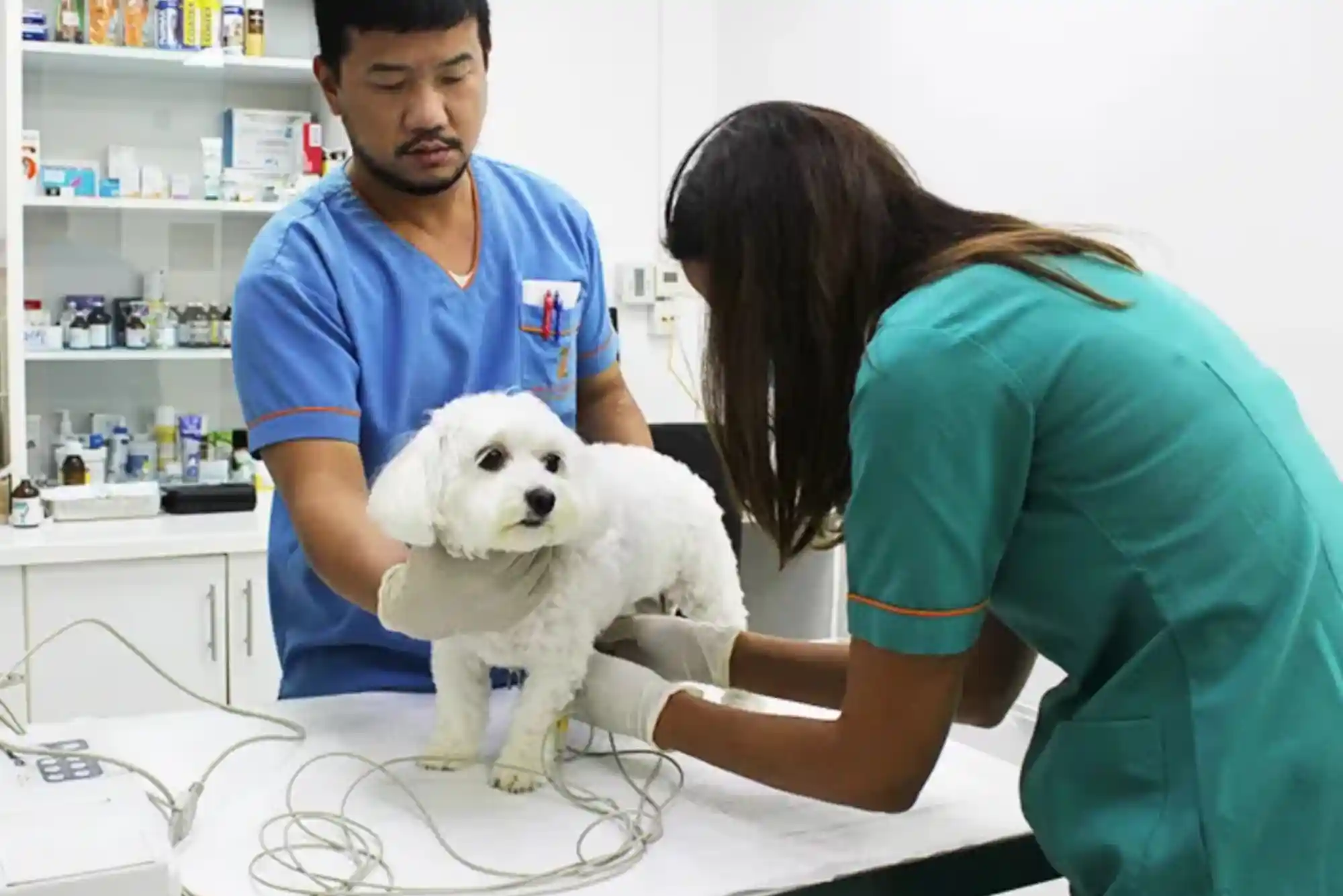
Health regulations for importing pets into the UAE protect the country from rabies and other transmissible diseases. The medical process must follow a strict chronological sequence, beginning with ISO-standard microchipping. Your pet must be fitted with an ISO 11784 or ISO 11785 compliant microchip before receiving any official vaccinations. Microchips inserted after a rabies vaccination render that dose legally invalid for export documentation.
Rabies vaccinations are mandatory for all dogs and cats entering the UAE. The primary rabies vaccine must be administered when the pet is at least 12 weeks old, and it must remain active throughout the relocation timeline. Pets traveling from the UK and primary European nations need an Official Veterinary Health Certificate issued by DEFRA in the UK or an authorized state veterinarian in the EU. Treatments against internal and external parasites must also be administered shortly before departure.
Rabies Antibody Blood Tests Demystified
A Rabies Antibody Titer Test (FAVN) measures the level of neutralizing antibodies in your pet’s bloodstream to confirm proper immunity against the rabies virus. The UAE classifies origin countries as either rabies-controlled or high-risk. Pets originating directly from the UK or designated low-risk European Union nations typically benefit from streamlined entry rules. However, specific blood test protocols apply if your pet originated from or transited through a high-risk region.
When required, the blood sample must be drawn at least 30 days after the rabies vaccination. The sample must be analyzed by an officially approved EU or international reference laboratory. To meet entry standards, the test results must demonstrate a minimum rabies antibody titer of 0.5 IU/ml. Keeping organized records of all laboratory reports and veterinary certifications prevents complications during border inspections.

Choosing Airline Approved Crates for Safe Air Travel
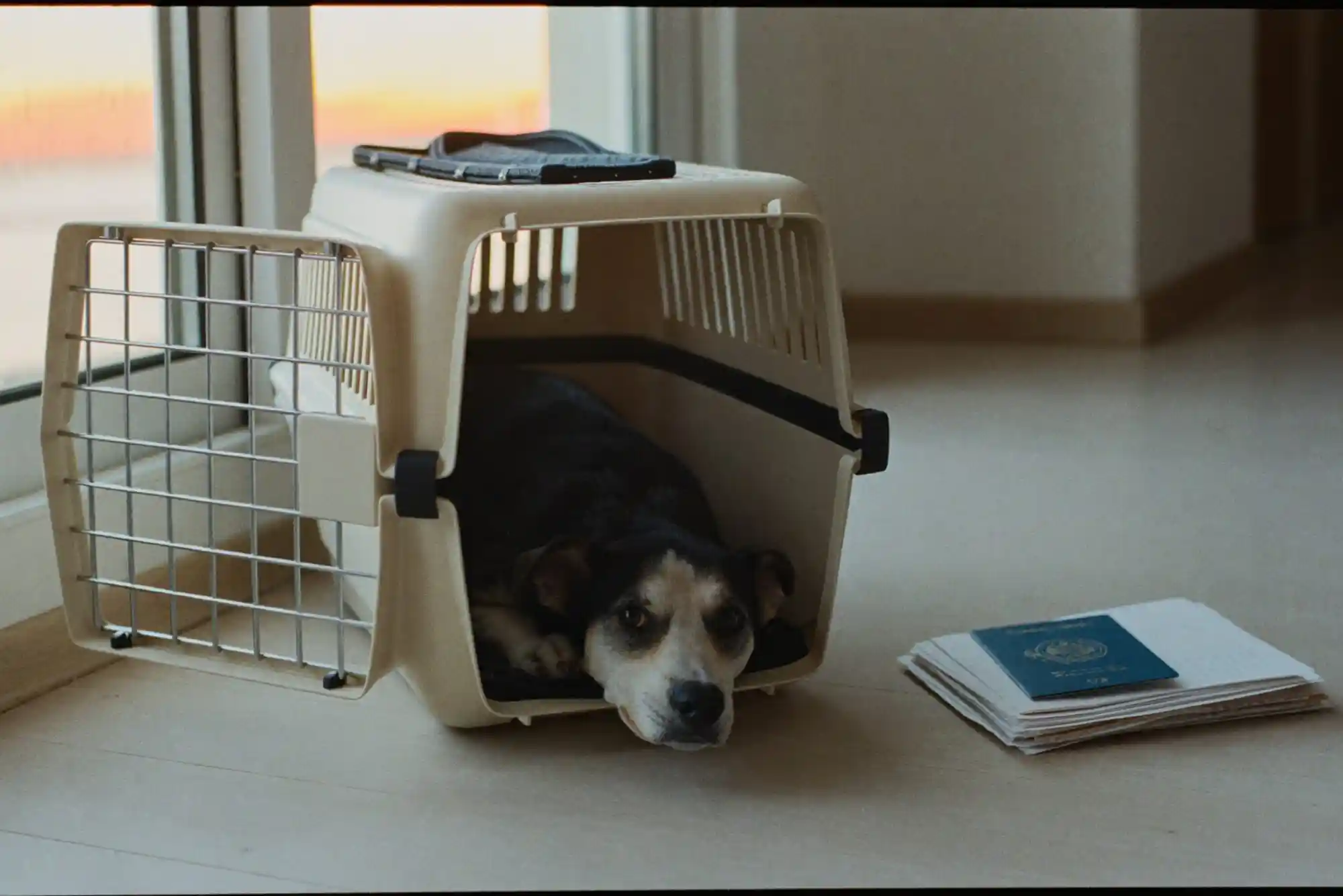
Air travel standards for live animals are governed globally by the International Air Transport Association (IATA) Live Animals Regulations. Airlines operating flights from the UK and Europe to the UAE enforce these standards strictly. An airline-approved travel crate must be made of rigid plastic, wood, or metal. Soft-sided carriers and foldable plastic crates are strictly prohibited for cargo travel, and the crate must feature a secure, spring-loaded locking system with metal-grated ventilation.
Proper sizing is vital for your pet’s safety and physical comfort throughout the flight. The crate must allow your pet to stand fully upright without their head or ears touching the top, turn around comfortably, and lie down naturally. Airlines require attachable, non-spill water and food bowls secured to the inside door, alongside absorbent bedding covering the bottom of the crate to keep your pet clean.
Navigating Import Permits and UAE Regulations
You must obtain a formal UAE Pet Import Permit from the Ministry of Climate Change and Environment before your pet departs. This permit is valid for 30 days from its date of issue, and each individual importer is permitted to bring a maximum of two pets per year under standard personal import permits. Bringing additional pets requires special commercial permits or registered relocation handlers.
The UAE maintains strict bans on specific dog breeds considered hazardous or dangerous, including Pit Bull Terriers, Japanese Tosa, and Dogo Argentino. Furthermore, brachycephalic or flat-faced breeds face severe air travel restrictions due to respiratory risks during transit. Pets entering from the UK and Europe generally travel as manifest cargo under direct air waybills in temperature-controlled compartments.
Frequently Asked Questions
How long does the pet relocation process from the UK/Europe to the UAE take?
The overall relocation process typically takes between 4 to 12 weeks from start to finish. The exact duration depends heavily on your pet’s current rabies vaccination status, the time required to process the UAE import permit, and whether rabies titer blood test waiting periods apply to your specific origin location.
Is there a quarantine period for pets arriving in the UAE from the UK or Europe?
There is no mandatory quarantine for pets entering the UAE from the UK or qualifying European countries upon arrival. This exemption applies as long as all entry criteria, including microchip verification, valid vaccinations, blood test reports, and health documentation, are fully satisfied.
Can my pet fly in the cabin with me from Europe to the UAE?
Most commercial airlines operating direct flights from the UK and Europe to the UAE require pets to travel as manifest cargo in a temperature-controlled hold. Cabin travel on these long-haul routes is generally restricted strictly to certified service animals.
What happens if my pet’s travel crate is too small?
Airlines rigorously inspect crate dimensions at the cargo terminal prior to departure. If the crate does not meet IATA minimum height, width, or length standards, the airline will flatly reject the animal for transit to protect its safety and wellbeing.