
Introduction
Reliable equipment is essential for keeping modern businesses productive. From cooling and electrical systems to machinery, plumbing infrastructure, generators, and other technical assets, every system requires appropriate care to perform consistently.
Waiting for equipment to fail before arranging maintenance can create unnecessary disruption and expenses. A preventive approach focuses on identifying potential issues early and keeping assets in suitable operating condition.
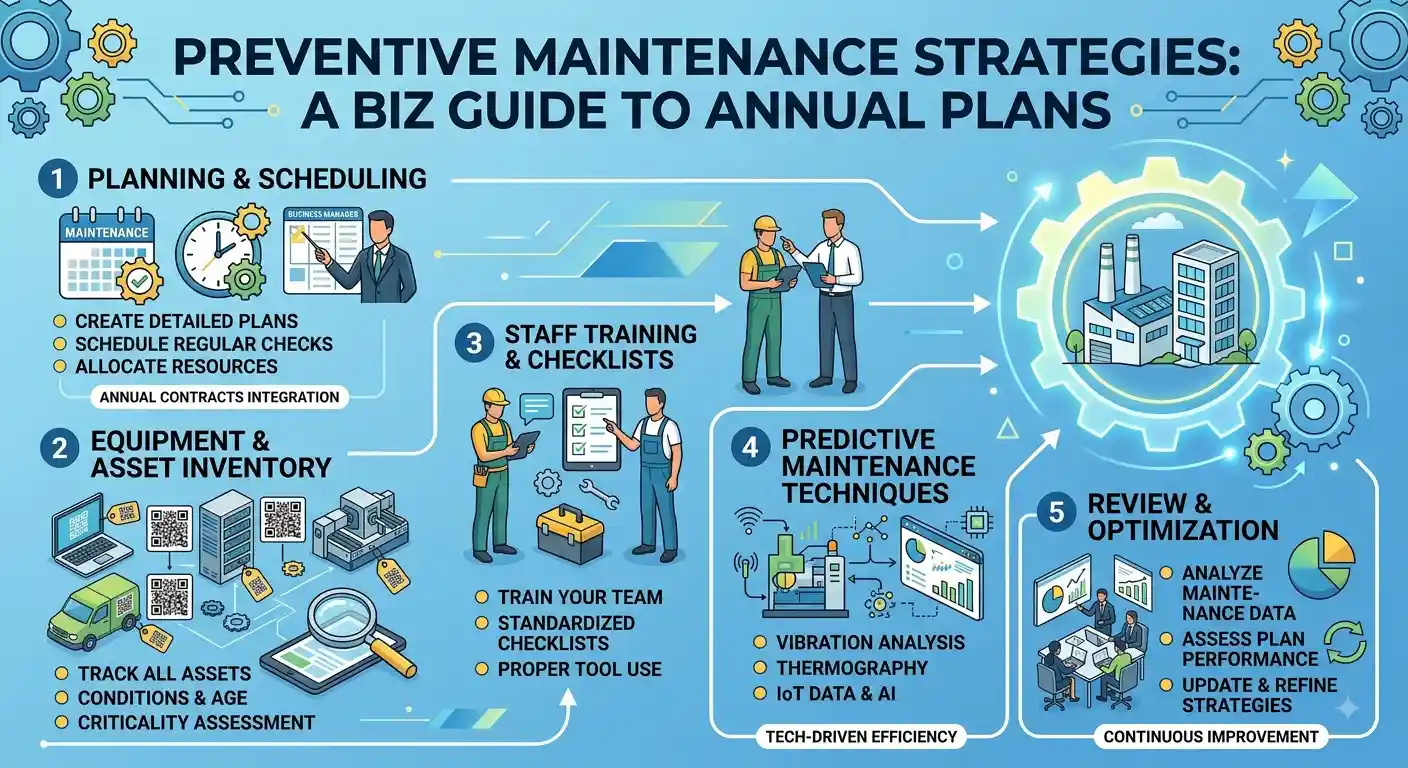
An Annual Maintenance Contract can provide the structure businesses need to follow a consistent preventive maintenance strategy throughout the year. Instead of treating each technical problem as an isolated event, companies can create a planned system for inspecting, servicing, monitoring, and maintaining their assets.
Start With an Equipment Inventory
A successful maintenance strategy begins with knowing what needs to be maintained.
Businesses should create an inventory of important equipment and systems. This may include air conditioning units, electrical panels, generators, pumps, machinery, plumbing components, elevators, and other building facilities.
The inventory should include information such as equipment type, location, age, operating hours, and maintenance history where available.

This information helps maintenance teams determine which assets require the most attention.
Categorize Assets by Importance
Not every piece of equipment has the same operational importance.
A business can classify assets according to the effect their failure would have on operations.
Critical equipment should receive greater attention because its failure may result in significant downtime or financial losses.
This approach helps businesses use maintenance resources more efficiently rather than applying exactly the same maintenance schedule to every asset.
Establish Suitable Inspection Intervals
Different equipment requires different inspection frequencies.
A system operating continuously under heavy demand may require more frequent attention than equipment used occasionally.
Maintenance schedules should therefore reflect actual operating conditions.
A professional maintenance provider can help determine suitable inspection intervals based on equipment type, usage, manufacturer recommendations, and observed condition.
Focus on Early Fault Detection
Preventive maintenance works best when potential problems are identified before they become major failures.
Technicians can look for signs such as unusual noise, vibration, overheating, leaks, reduced performance, damaged components, or abnormal electrical behavior.
These warning signs should be documented and investigated rather than ignored.
Early intervention can sometimes prevent a minor issue from developing into a costly breakdown.
Keep Filters and Components Clean
Dirt and contamination can affect the performance of many systems.
HVAC filters, coils, ventilation components, machinery parts, and other equipment may require regular cleaning depending on their environment and usage.
Cleaning schedules should be based on the specific system rather than following a generic approach.
Proper cleaning can help maintain performance and reduce unnecessary strain on equipment.
Monitor Equipment Performance
Maintenance should not focus only on physical inspection.
Performance trends can also provide useful information about equipment condition.
Changes in cooling output, energy consumption, operating temperature, vibration, pressure, or production performance may indicate developing problems.
Monitoring these changes allows maintenance teams to investigate potential issues before they become serious.
Maintain Electrical Systems Proactively
Electrical infrastructure requires careful preventive attention.
Qualified technicians can inspect relevant components for signs of wear, overheating, loose connections, or other conditions that may affect system reliability.
The exact inspection and testing procedures should depend on the electrical installation and applicable requirements.
Regular professional maintenance can help businesses identify electrical problems before they cause wider operational disruption.
Schedule HVAC Servicing Before Peak Demand
HVAC failures can become particularly disruptive during periods of high demand.
Businesses should avoid waiting until cooling or heating systems begin struggling during peak operating periods.
Planned servicing before high-demand seasons can provide an opportunity to identify faults, clean components, and address maintenance requirements.
This can help reduce the risk of unexpected problems when the system is most needed.
Maintain Plumbing and Drainage Systems
Plumbing problems can cause both operational disruption and property damage.
Leaks, blocked drains, damaged valves, and other faults should be addressed as soon as they are identified.
Regular inspections can help businesses discover developing problems before they become major incidents.
An appropriate maintenance plan should include plumbing checks where these systems are important to the property’s operations.
Test Backup Systems Regularly
Backup equipment is often overlooked because it may remain unused for long periods.
Generators, emergency power systems, backup pumps, and similar equipment must still be maintained and tested to remain ready when required.
A maintenance schedule should include appropriate checks for backup systems.
Businesses should confirm that testing procedures comply with equipment requirements and applicable standards.
Keep Accurate Maintenance Records
Documentation is an important part of preventive maintenance.
Service records should identify inspection dates, equipment condition, completed work, replacement components, and outstanding recommendations.
Over time, these records can reveal recurring problems and help managers identify assets that require additional attention.
Maintenance documentation also makes it easier to review the performance of an annual service provider.
Track Recurring Problems
A single equipment fault may be normal, but repeated failures deserve further investigation.
If the same component requires repair several times, businesses should determine whether there is an underlying problem.
The cause may involve incorrect installation, operating conditions, component quality, inadequate maintenance, or equipment age.
Identifying the root cause can be more valuable than repeatedly repairing the same symptom.
Use Maintenance Data for Replacement Planning
Preventive maintenance records can support long-term asset planning.
When an asset becomes increasingly expensive to maintain, businesses can compare continued repair costs with the potential benefits of replacement.
This approach allows companies to plan capital expenditure instead of waiting for a critical failure to force an immediate replacement.
Coordinate Maintenance With Business Operations
Maintenance activities should be planned around the company’s working schedule whenever possible.
Service visits can sometimes be arranged during quieter periods to reduce disruption.
For businesses operating continuously, maintenance windows may need to be carefully coordinated.
An effective Annual Maintenance Contract should take these operational requirements into account when establishing the service schedule.
Review the Maintenance Plan Throughout the Year
A maintenance strategy should not remain unchanged if business conditions change.
New equipment, extended operating hours, building expansion, or changes in production can affect maintenance requirements.
Businesses should periodically review service records and equipment performance to determine whether the maintenance plan remains appropriate.
This ensures that the contract continues to reflect actual operational needs.
Work With a Qualified Maintenance Provider
Preventive maintenance requires appropriate technical knowledge.
Businesses should select providers with experience relevant to their equipment and systems.
Technicians should understand the correct maintenance procedures and safety requirements for the assets they service.
A provider that communicates clearly and maintains accurate records can also make preventive maintenance easier to manage.
Build Prevention Into the Business Culture
Preventive maintenance is most effective when employees understand the importance of reporting problems early.
Staff members may notice unusual sounds, leaks, temperature changes, electrical issues, or equipment performance problems before a scheduled inspection.
Encouraging employees to report these signs promptly can help maintenance teams investigate potential problems sooner.
Final Thoughts
Preventive maintenance provides businesses with a proactive way to protect equipment, reduce unexpected failures, and support reliable operations. The approach becomes even more effective when it is organized through a structured service schedule.
An Annual Maintenance Contract can help businesses maintain this consistency by providing planned inspections, scheduled servicing, technical support, and maintenance documentation throughout the year.
The most effective strategy is not simply to perform more maintenance but to perform the right maintenance at the right time. By understanding asset importance, monitoring equipment condition, tracking recurring problems, and reviewing maintenance data, businesses can create a more efficient long-term maintenance program.
A well-planned preventive maintenance strategy can ultimately help companies protect their investments, reduce operational interruptions, and maintain dependable equipment performance.
Related Reading: كيف تختار المساعدات الذكية العلامات التي توصي بها، ولماذا قد تكون علامتك غائبة
Related Reading: How Small Businesses Can Use SEO Tools to Improve Technical SEO Without Getting Overwhelmed in 2026
Related Reading: The Article Should Present the Hafilat Card Recharge Service